Begin of Everything Divided. How can we make interactive work with spectators?
PAUSE.
A: Let me show you one publication which …
N: … too simple … maybe… minimal… minimalistic! (E: Mhm…)
A: … which was good, but it was very expensive. (E: smiling …) So, not our option, but… (the voice disappears in the background)
N: I have expensive ideas too … (E: smiling …) … but we don’t have money… (E: smiling…) So, I was thinking, exactly because of the money thing, that maybe if we have this trick… (E: Mhm…)… on the outside, with the wall … so we conceptualize covers … (E: Mhm…) … it can be also a play within the book. (E: Mhm…) Because this is what we’ve been also talking about last time – what would be the trick? (E: Mhm…) You said you asked – what would be an impulse? (E: Mhm…) … for the audience to take it? (E: Mhm…) So if we make it like a brick, it can be like a … actual, actual simple message. Like – everyone takes a brick away. (E: Mhm…) It can put the brick in… (E: Mhm…) … but it can also take it away. So the wall is built and dismantled … It could be dismantled by people. (E: Mhm…)
A: Unfortunately… (the voice begins in the background and ascends while the steps are approaching)
N: … and maybe that’s a good message for … (E: Mhm…)
A: … to do this. (everyone smiling)
E: Oh…
A: It was one…. one choreographic project a… which I contributed as dramaturge … (E: Mhm…) And she called it a “spineless book”. (E: Mhm…) It doesn’t have a spine but it has this. (E: Mhm…) And it apparently cost … I don’t know, she told me, like… (E: Mhm…) … just design and a… (E: Mhm…) … anything, just… just in terms of…
N: Simplicity.
A: Simplicity, at one, at one point … (E: Mhm…) … but then also in terms of that, we should under… or at least, I mean we do understand, but … (the sound of pages flipping) … just to … maybe… just for the case of the record – to understand it as a, as a … artistic book. (E: Mhm…)
N: Yes, sure.
A: As an art-book as such.
N: Bravo. You’ve got a point.
A: … and here to… and then you come to the… and here it becomes something else. (E: Mhm…)
N: May I be so… so obnoxious and add just one more thing and that is just for the sake of not forgetting about it? (E: Mhm…) What do you think… (E: Mhm…) … about this ISBN broj, a… number?
E: ISBN?
N: on the…
E: Ye, ye, ye…
N: Back of the book…
E: Ya, ya, ya…
N: So, is it possible to get that? That’s unique a… (E: Ya, ya, ya …) … number … you know? (E: Mhm…)
A: But… but in Korea?
N: Ye, in Korea… (A: Ye, ye …) … in Korea… …? And… if you think that’s wise because then we will have a publication, like, a regular one … (E: Mhm…) … And not a simple, self-made … (E: Mhm…) … art book. (E: Mhm…) Because that’s a different category. (E: Mhm…) So, what is that we are aiming for? (E: Mhm…) So, personally I… (the sound of the message pinging) So, from my point of view, ISBN would be good. (E: Mhm…)
A: … to have.
N: … politically.
(E: Mhm…)
N: And conceptually.
(E: Mhm…)
N: What does it mean? If we addressing people …
A: And institutions, and …
N: And institutions, and public discourse… about this. (E: Mhm…) And it’s not limited to the privileged space of art. And Artist. No matter what class, just it’S a privileged space, you know, where it’s like, this dish it has a boundary. (E: Mhm…) And our ambition, the way I understand it… (E: Mhm…)… is to go over the boundary. Like to dismantle the wall – to dismantle the boundary so that we can share this multiplicity and diversity… no that… no, wrong words… a… dissensus of thinking about this one particular problem of the wall. (E: Mhm…) So maybe this is good, but I don’t know if it’s achievable. (E: Mhm…) How we… how we apply? How much time do we need?
E: WE should contact a… contact a…
N: Kerry?
E: … publishing company.
A: Aaaa, we need a publishing company for that…
E: Monika can maybe help us…
N: We owe her life. (E and N smiling)
E: And I am… ya, ya, ya… I think if we decide to get ISBN then we can get this kind of number, but we should ask first how much or how long
A: Oh man…
E: … to get the number…
N: Do we pay for that or a…?
A: aaaa… I think not.
N: Because actually … could that be the jurisdiction of the curator of the exhibition? (E: Mhm…)
E: Ya.
N: Because it could be their publishing house. (E: Mhm…) If they have a publishing activity. (E: Mhm…) For example.
E: It a…
N: The Cultural Centre…
E: May I ask again?
N: Sure.
E: I … (smiling) … I understand right or wrong? (N: Ye, ye, ye …) A … for ISBN you want to have a unique character book? … So there is only one book?
N: Only one book … which we make. (E: Ya.)
E: And that’s why you want an ISBN number?
N: Yes, so I thought that this book could belong … (E: Mhm…) … to this largest a…
A: library…
N: library of the World
A: So that it’s officially recognized as a book. Not only…
N: Not as an art book. (E: Mhm…) Because I have an art book. (E: Mhm…) Not one but two. (E: Mhm…) But nobody knows about it. (E: Mhm…) But if you google this ISBN … (E: Mhm…) … it will always go out
E: So people can search everywhere… on the internet.
A: Ya…
E: Aaaa…
A: ‘cause ISBN…
N: It’s like a regular book…
A: Ya, ya,ya …
N: It’s recognized all over the world no matter … (E: Mhm…) … no matter the nation… (E: Mhm…) … so this is the…
A: It’s a matter of … (N: publishing activity …) … making your book visible in a lib… in a world library system, so to say.
N: Ye, ye, ye… so you can track it.
A: So each book…
N: Everybody can track it.
A: … so each book has it’s own … (N: … unique… )… has it’s own (N: Unique …)… has it’s own ISBN. (E: Mhm…)
N: So when you publish a book … (E: Mhm…) … with Korean history … (E: Mhm…) für…
(A:… Auslander…) … no, nie, für… kleine leute … (everyone is smiling) … dann… you get the …
A: … Radio Geschite für kleine leute.
N: Then you have a unique ISBN and when it goes out I, for example google it, and I send it to you … (E: Mhm…) E, Eunseo do you remember this book? (E: Mhm…) I’d like to have it? (E: Mhm…) Or, I’d like to pay for … (E: Mhm…)… additional … repreint. (E: Mhm…) Can we do it? And you have like.. (E: Mhm…) It is catalogued.
E: Yea. I… my question is a… what kind of experience we want to offer to publicum? So, a…
N: What … what is your concern?
E: It’s always kind of a expect of coins … (E: Mhm…) … so unique… unique… A… if we want to make a unique book … (N: Mhm…) … we can make one book. (smiles) Not a lot of…
A: A no, no, no, no…
N: No.. nie… not in that way…
A: It’s not one… just one book. (N: Nie, nie, nie …) It’s not just physically one book. It’s a… five hundred .. all the edition has this one ISBN number… It’s not just this about one book … (E: Ya, ya, ya …) It’s the whole edition is a …
E: I understand concept of ISBN but a …
A: You thought it’s just one book…
N: Ne, ne, ne, ne… completely different, I think I understand… You are asking… you are considering if we have serious content for the book? For the really book … (E: Mhm…) … really?
A: … no.
E: No.
N: Oder?… I did not understand, then. (smiling)
E: Actually I am not so clear … (N: Aha …)… about the idea…
A: You thought that ISBN is just one book?
N: Nie, nie, nie…
E: Nie…
A: A, ok…
N: She is a publisher! (everybody is laughing)
A: No, I just thought you were thinking… (N: C’mon…!) (everybody is laughing)
N: Nie, nie, nie …
E: Because, from the… from the talk about visualisation … so I just imagined exhibition hall… and there would be a lot of books… (E: Ye, ye, ye …) …we publish it… (N: Mhm…)… with ISBN… (N: Mhm…) … and people can touch, can read, can do everything…
A: … can take it with them…
E: … Ya…
N: … and take with them… and take with them…
E: But, I want to give them more … some experience. So, if we just make an exhibition on the library as a book of our artwork it can give them same experience, I think. They just a… they just a … put the book .. get the book and then open the book and read a book and then return the book or take the book…
N: … or they… then will not dismantle the wall… (E: Mhm…) In the library you have no walls … (E: Mhm…) … and then you take something and you get it back… (E: Mhm…) But then you come to the exhibition you don’t come to read, right? (E: Mhm… Ya.) That’S the first surprise. (E: Mhm…) So you have to read. (E: Mhm…) So their experience is to… eneclich… to interiorise multiple stand-points regarding dismantling Korean wall. (E: Mhm…) So how to interiorise? … Positions which are in conflict?
E: Then… Ya. I understand the idea of dismantle… (N: No, no, no it’s a good …) … then we should think about the title. I just a… imagine about action from the public … audience. So they come to an exhibition and then they see the wall and they aware of their action if they so…
N: How will they know to dismantle the wall?
E: Ya, ya, ya…
N: This is the same thing you asked the last time… (E: Ya, ya …) If they have the rule…? (E: Mhm…) But…
E: But we should not think about that now. (N: I think we should – you are right …) So, there is a rule… or… we can make a rule… a… a…
N: I know what you mean
E: … anyway and then they did something.
A: Ye, ye, ye…
E: And a visual … visually they dismantle the wall… so… and the Title of book is RED PEOPLE. Isn’t it?
A: Ya…
N: N… nie. That’s not the title of the book. That’s the title of the work.
E: Oh, ok.
N: We can title the book how ever we want.
E: Than it’s the… very important that we … how… Which title we can have? So…
A: … of the book, yea…
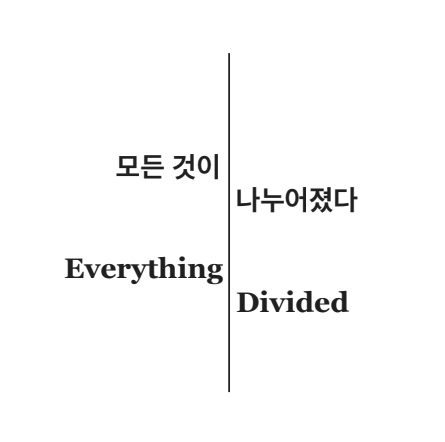
E: Of the book. So, I got from your view an idea… Everything Divided. (smiles) It’s very good.
A: … Everything Divided…
E: Everything Divided dismantle. So Everything Divided is dismantled and disappear in the world. (smiling)
A: But you know, what now I was thinking…
N: Wait, wait, wait…
E: No, no, no… it’s ok…
N: No, because we jump a lot and I just want you to finish.
A: I also need to write. (E: Mhm…)
N: Because this is important, I think. (E: Mhm…) I am sorry … and him also … apologize…
E: (whispering) … Everything Divided … (long silence) … So this work makes an action from the audience that they dismantled everything divided. (smiling) They destroy…
N: I understand what you are trying to do to conceptualize the title of the work with the title of the book. (E: Ya.) To include in the… (E: Ya…) … you are a fast runner. (E: Ya, ya … (smiling)) I haven’t reached that point yet. (E: Ye, ye, ye … smiling) A… title of the work and title of the book… (E: Smiling …)
A: Yea, because of the book… Yea, I think it’s a good thing that the book doesn’t have the same title as the… (E: Ya, ya, ya …) … work.
N: Also, we are including a lot of … your a … your a… a… how should I say? Contribution. Like, your auth… auth… authentic contribution and that will be your own text with its title … (E: Mhm…) … and his own text with his title… (E: Mhm…) … and mine… and interviews are going to be probably highlighting the punch line … (E: Mhm…)… of the whole… (E: Mhm…) … and then the chapters… (E: Mhm…) … we will have a lot of things to… (E: Mhm…) I just want to…
A: So, actually the book is a kind of reader, but the artistic reader. Not like, you know, like a boring academic reader when you have this, this and that …
N: It’s almost a reader or entirely, of our process. (E: Mhm… Ya, ya, ya)
A: Ya.
N: Of how we where we started to how are we going to finish. (E: Mhm…) Because we are trying to build something … (E: Mhm…) … which is in opposition… (E: Mhm…) … of… wo… the whole work is going to be dis… mantled… (E: Mhm…) … dissolved, dissolved! (E and A: Ja…) So we are dissolving… actually, we are building only to dissolve. (E: Mhm…) It can also reflect in the relationship between the title of the book and … now I get it! (E: Ya …) Title of the work and title of the book! (smiling) (E: Ya… smiling … genau! Ya.) Now I got it. Because I thought for a glance – I got it – but then I just lost it. (E: Ya, ya …)
A: And, and… you think like a … if this is the book … (E: Mhm…) … so here it says- Everything Divided. (E: Mhm…) Everything… (more to himself: … oh, what’s wrong with this?…) … Everything Divided. (showing the spine of the sample book as the place to be for the book title) (E: Mhm…) Make sense. Super! I conceptually also think it’s a …
N: I also …
A: How would you, how would you write that in Korean?
E: How do you write it in Korean?
A: How do you write this … this sentence – Everything Divided?
E: A, a, a… May I? (laughing while reaching for the notebook and pen)
A: Ye, ye, ye…
E is writing down the expression in Korean. A small concentrated silence, filled with admiration, follows the writing process of every letter. The effort is crowned with joint laugh.
E: (explaining sign by sign): Every… (A: Aha…) … things. (A: Aha…) Divided. (A: … aha …)
N: Divided is in the middle. And it’s the point is binding. (The word divided is dividing every-thing.) (E: Mhm…) And it’s actually dividing.
E: Everything divided. So…
N: It works perfectly…! (E: Ye …)
A: But then … we could actually call it this: (showing the words in Korean) Every – Divided – Things… ? (E: smiling … Ya, ya… ) I mean, we know that it’s Everything Divided.. but… Yea, we can play with that.
N: But we can also play with language inside, because … (E: Mhm…) … When I was typing… we are actually speaking all languages… (E: Mhm…) … except for Korean. (E: Mhm…) You can also say in Korean something. (E: Ya, ya, ya …) And like … have it like this… How do you pronounce this?
E: A… a…
A: How do you say Everything Divided in Korean?
E: A… bot… bot… mode… mode… moden… Moden. Moden. Na… nu… O, o, o… djin. Ko, kot, kot, kot, kot…tl. (smiling)
(All together, repeating out loud): Modn – Nanu-Odjin…
A: O-djin…
N: Like Uhjin…?
E: Ja, ya… genau! Ja… (smiling) This is Uhjin… (showing the part of the sign which is signifying Uhjin’s name) Actually…
N: Awu… (E: smiling…) … (N repeating after E): Nanu-Odjin-Gotl…
A: Gotl…
All of them repeating the correct pronunciation of Go-tl a few times.
E: Modn – Nanu – Odjin – Gotl …
N: Gotl..
A: (smiling)
N: It’s perfect!
A: Perfect!
N: It’s very nasal…
To be continued.


 오인제오 이Eunseo Yi